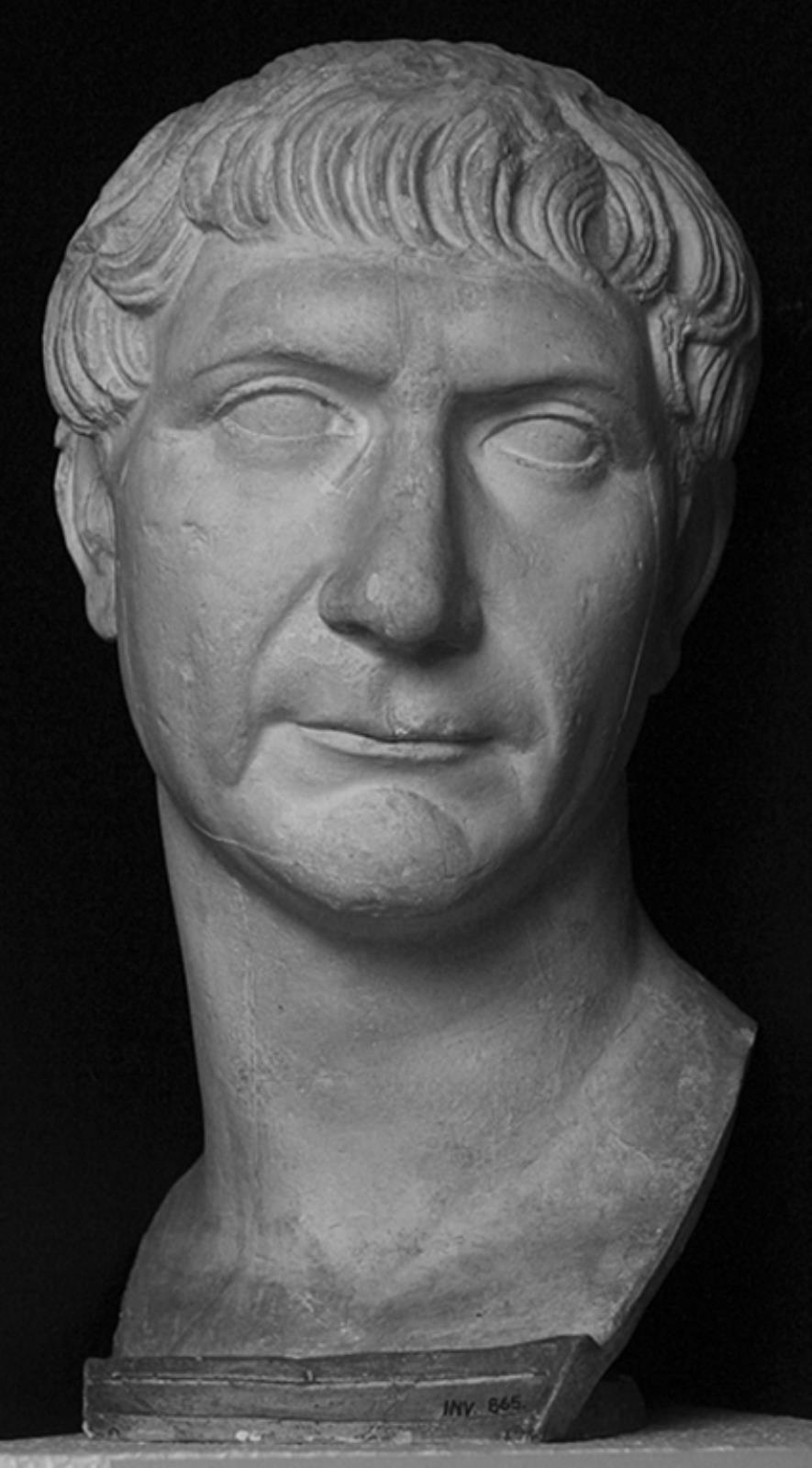
Trajan (98-117 e.Kr.)
✦ Read about this
This is a plaster cast (gipsafstøbning) of a portrait of the Roman emperor Trajan, who ruled from 98 to 117 CE. The original sculptor is unknown.
As a plaster cast, the work reproduces an ancient sculpture rather than being an original carving. Such casts were widely produced to make copies of celebrated antique portraits available for study and display, and the collection is held by the National Gallery of Denmark (SMK).
Trajan was among the most prominent Roman emperors, remembered for the territorial expansion of the empire during his reign. Portraits of him survive in considerable numbers, reflecting the official imagery circulated throughout the Roman world.
Background drawn from SMK — National Gallery of Denmark
Today's poem
Native Moments
NATIVE moments! when you come upon me—Ah you are here now! Give me now libidinous joys only! Give me the drench of my passions! Give me life coarse and rank! To-day, I go consort with nature’s darlings—to-night too; I am for those who believe in loose delights—I share the midnight orgies of young men; I dance with the dancers, and drink with the drinkers; The echoes ring with our indecent calls; I take for my love some prostitute—I pick out some low person for my dearest friend, He shall be lawless, rude, illiterate—he shall be one condemn’d by others for deeds done; I will play a part no longer—Why should I exile myself from my companions? O you shunn’d persons! I at least do not shun you, I come forthwith in your midst—I will be your poet, I will be more to you than to any of the rest.
Walt Whitman · Public domain
✦ Read about this
Walt Whitman, the American poet often called the father of free verse, built his reputation on work that his contemporaries found scandalous. His 1855 collection *Leaves of Grass* was condemned by some as obscene for its overt sensuality, and "Native Moments" shows exactly why. Whitman drew on both transcendentalism and realism, and is now regarded as one of the most influential poets in American and world literature.
The poem is a direct embrace of what polite society rejected. The speaker demands "libidinous joys," consorts with "nature's darlings," and deliberately chooses a prostitute for a lover and a lawless, illiterate outcast for a friend. The closing lines turn this into a statement of poetic purpose: addressing "you shunn'd persons," Whitman declares he will not shun them but will be their poet.
Written in Whitman's characteristic free verse, the poem relies on exclamatory repetition and accumulating lines rather than meter or rhyme.
Background drawn from PoetryDB & Wikipedia