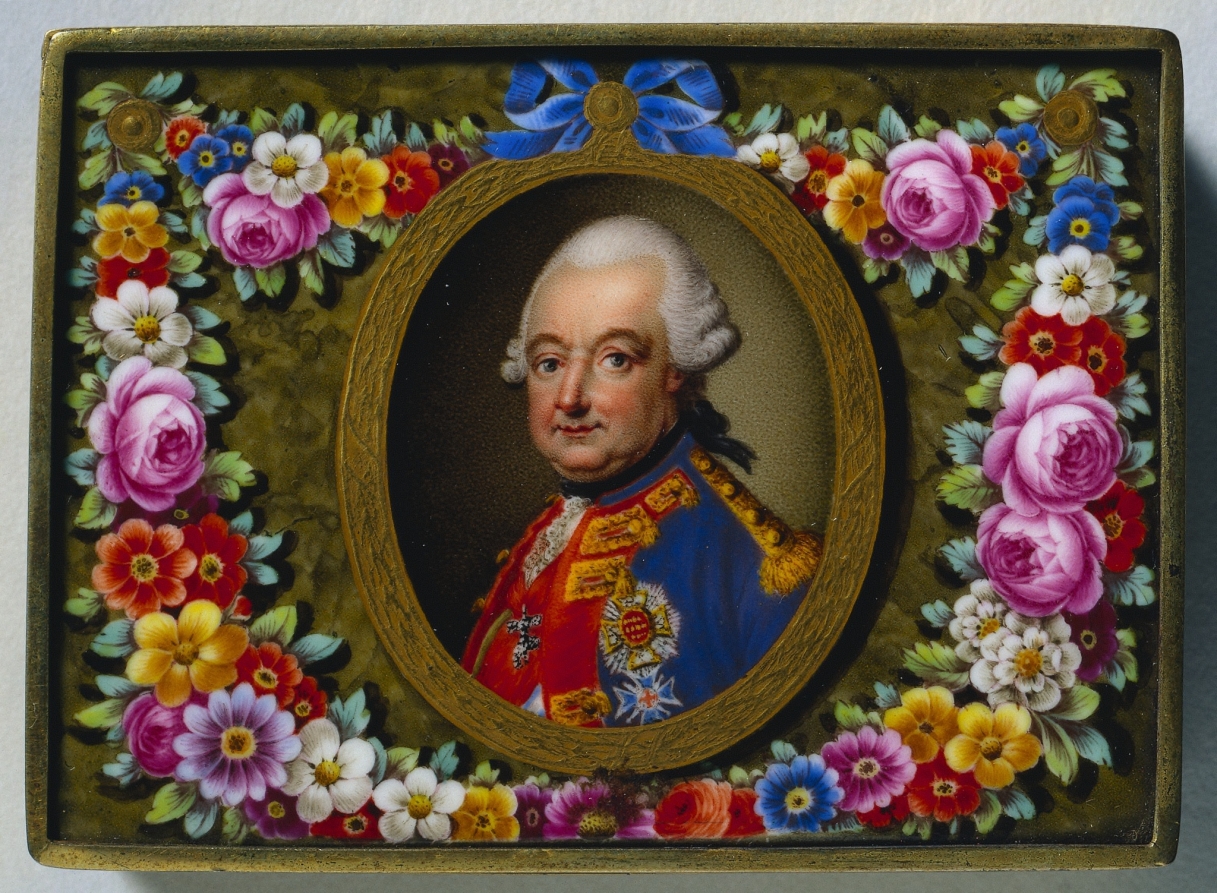
Snuff Box with Portrait of Charles I, Duke of Brunswick
✦ Read about this
The snuff box carries a portrait of Duke Charles I of Brunswick-Wolfenbüttel — the very ruler who had founded the manufactory that produced it. Charles established the Fürstenberg China Factory on 11 January 1747, and the object thus links the enterprise directly to its patron.
The Fürstenberg factory, sited on the Weser river and set up under Johann Georg von Langen, is the second-oldest porcelain manufacturer in Germany still operating on its original site. The snuff box was made there around 1770.
It consists of painted porcelain plaques set into metal mounts, forming a small box measuring roughly 2.3 by 8 by 5.8 cm. It entered the Cleveland Museum of Art in 1916 as a gift of Mr. and Mrs. J. H. Wade.
Background drawn from Cleveland Museum of Art & Wikipedia
Today's poem
From Sunset to Star Rise
Go from me, summer friends, and tarry not: I am no summer friend, but wintry cold, A silly sheep benighted from the fold, A sluggard with a thorn-choked garden plot. Take counsel, sever from my lot your lot, Dwell in your pleasant places, hoard your gold; Lest you with me should shiver on the wold, Athirst and hungering on a barren spot. For I have hedged me with a thorny hedge, I live alone, I look to die alone: Yet sometimes, when a wind sighs through the sedge, Ghosts of my buried years, and friends come back, My heart goes sighing after swallows flown On sometime summer's unreturning track.
Christina Rossetti · Public domain
✦ Read about this
Christina Rossetti (an English writer of romantic and devotional poems) is best known for "Goblin Market" and "Remember." This poem, "From Sunset to Star Rise," is a sonnet that turns on themes of isolation and withdrawal.
The speaker urges "summer friends" to leave, describing herself as "wintry cold," a stray sheep and a sluggard with a "thorn-choked garden plot." She has fenced herself off with a "thorny hedge" and expects to live and die alone. The final lines soften this stance: a wind through the sedge brings back "ghosts of my buried years," and the heart sighs after "swallows flown" and lost summers.
The poem works through a sustained contrast between summer and winter, warmth and cold, company and solitude. Its imagery of hedges, barren ground, and departed birds gives shape to a chosen but grieved-over seclusion.
Background drawn from PoetryDB & Wikipedia