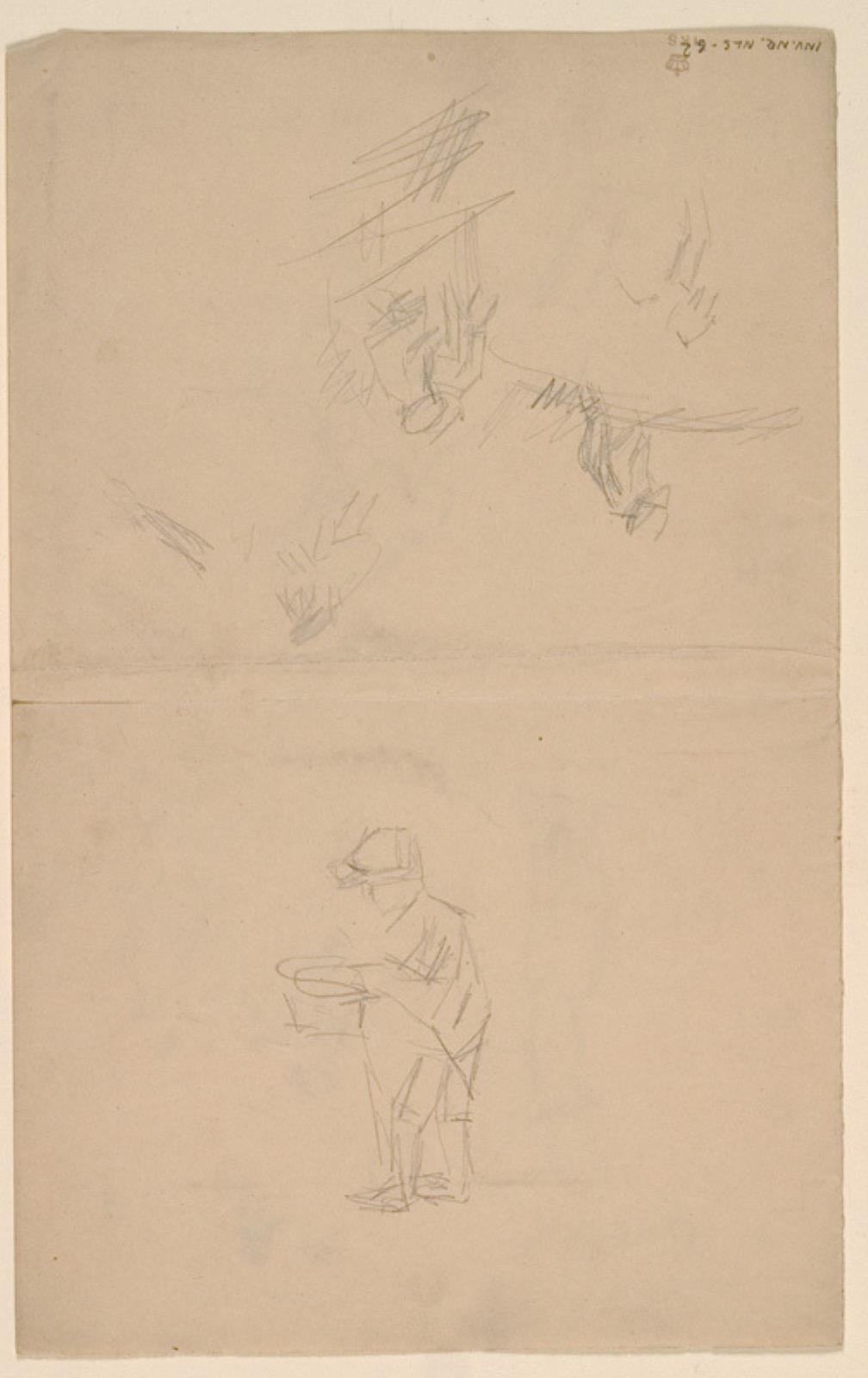
Små figurskitser
✦ Read about this
Niels Larsen Stevns (1864–1941) trained first as a journeyman painter before enrolling at the Kunstakademiet in Copenhagen, studying there in 1886–1887 and again in 1892–1894. This dual background — practical trade skills alongside academic training — shaped his career as both painter and sculptor.
Among his major undertakings was assisting Joakim Skovgaard with the decoration of Viborg Cathedral, working in a simplified manner drawn from early Christian and Byzantine art.
*Små figurskitser* ("Small Figure Sketches") is a pencil drawing held by the National Gallery of Denmark (SMK). As working studies of figures, sheets of this kind document the preparatory stages behind Larsen Stevns's finished compositions.
Background drawn from SMK — National Gallery of Denmark & Wikipedia
Today's poem
Lines Written In Early Spring
I heard a thousand blended notes, While in a grove I sate reclined, In that sweet mood when pleasant thoughts Bring sad thoughts to the mind. To her fair works did Nature link The human soul that through me ran; And much it grieved my heart to think What man has made of man. Through primrose tufts, in that green bower, The periwinkle trailed its wreaths; And 'tis my faith that every flower Enjoys the air it breathes. The birds around me hopped and played, Their thoughts I cannot measure:-- But the least motion which they made It seemed a thrill of pleasure. The budding twigs spread out their fan, To catch the breezy air; And I must think, do all I can, That there was pleasure there. If this belief from heaven be sent, If such be Nature's holy plan, Have I not reason to lament What man has made of man?
William Wordsworth · Public domain
✦ Read about this
William Wordsworth was an English Romantic poet who, with Samuel Taylor Coleridge, helped launch the Romantic Age in English literature through their joint publication Lyrical Ballads (1798), in which this poem appeared.
"Lines Written In Early Spring" is built from six quatrains in a simple, ballad-like measure. The speaker sits reclined in a grove, listening to birdsong and observing primroses, periwinkle, and budding twigs. Central to the poem is the conviction that nature is animated by pleasure — that "every flower / Enjoys the air it breathes" and that the birds' motions register "a thrill of pleasure."
Against this sense of nature's harmony the poem sets a recurring note of grief at human conduct: the phrase "What man has made of man" opens and closes the argument. The pleasant scene provokes sad reflection, and the poet frames nature's contentment as a standard by which human society is found wanting.
Background drawn from PoetryDB & Wikipedia